
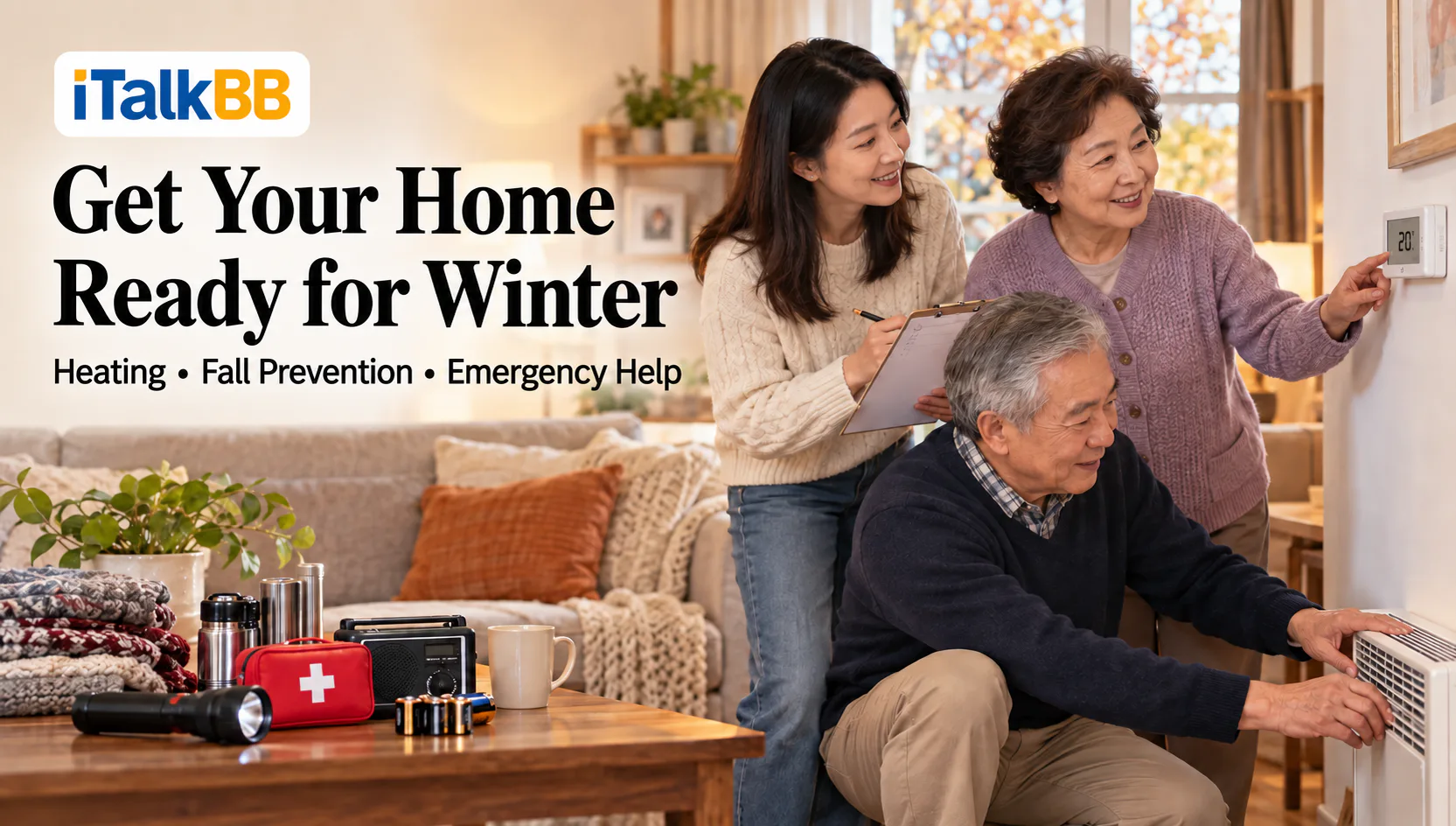
As fall turns to winter in Canada, families with older adults should prepare more than warm clothing. Checking the heating, carbon monoxide alarms, lighting and slip prevention measures, and gathering supplies for a power outage can help make the home safer. For seniors who live alone, it is also important to plan how to get help after a fall or sudden illness. This article covers five checks families can make before cold weather arrives.
What should families with older adults check before winter
Start with the heating system, carbon monoxide and smoke alarms, lighting and fall hazards, at least 72 hours of emergency supplies, and a familiar way to call for help. The Government of Canada's extreme cold preparedness guidance recommends maintaining heating equipment before cold weather and checking that older relatives have enough warmth, food and medication.
Winter in Canada can arrive earlier than expected. As temperatures fall and daylight hours shorten, families can use the autumn months to check their homes. If your parents spend time at home alone, nighttime lighting and emergency contact arrangements deserve particular attention.
1 Test the heating before the coldest day
After a summer without using the heating, the first cold spell may reveal inadequate heat, poor airflow or a repair that needs attention. Testing it early gives you time to address problems before an older family member is left waiting in a cold home.
Check that the system starts normally, keep furniture and other items clear of vents, and inspect filters according to the equipment instructions. Maintenance involving a furnace, chimney or other fuel-burning equipment should be handled by a qualified professional. Ontario's carbon monoxide safety guidance also recommends regular inspection and maintenance of fuel-burning equipment to keep ventilation and exhaust systems working properly.
Set aside a day before winter to check that your parents' home is heating reliably. If you have concerns, arranging a professional inspection early is easier than finding urgent repairs on the coldest day.
2 Pay attention to bedrooms as temperatures drop at night
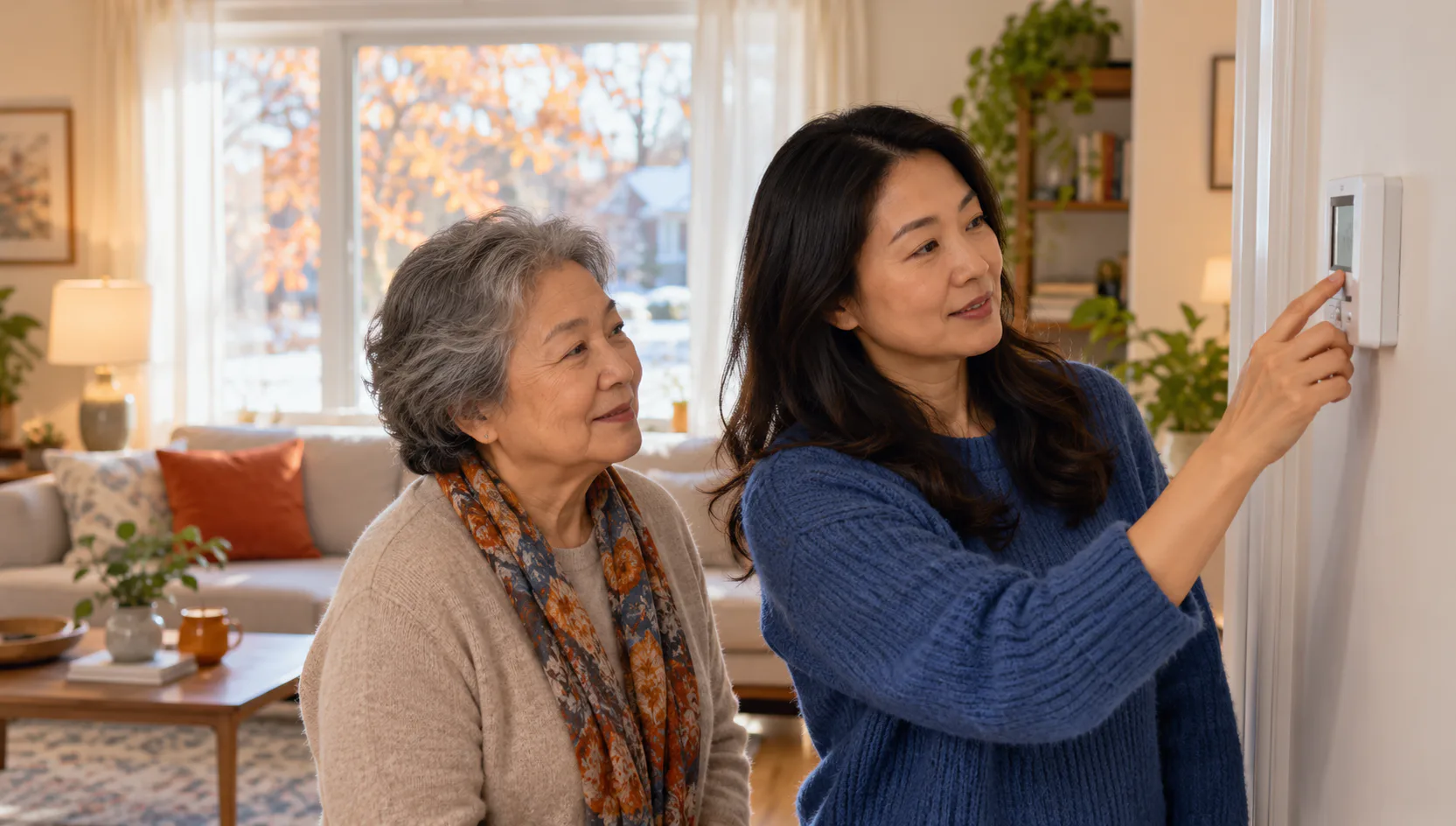
The living room may feel warm during the day, while a bedroom near a window, a basement room or a poorly insulated area feels noticeably different late at night. Before bed, check that the heating is working, keep the bed away from direct drafts, and place warm clothing and bedding within easy reach.
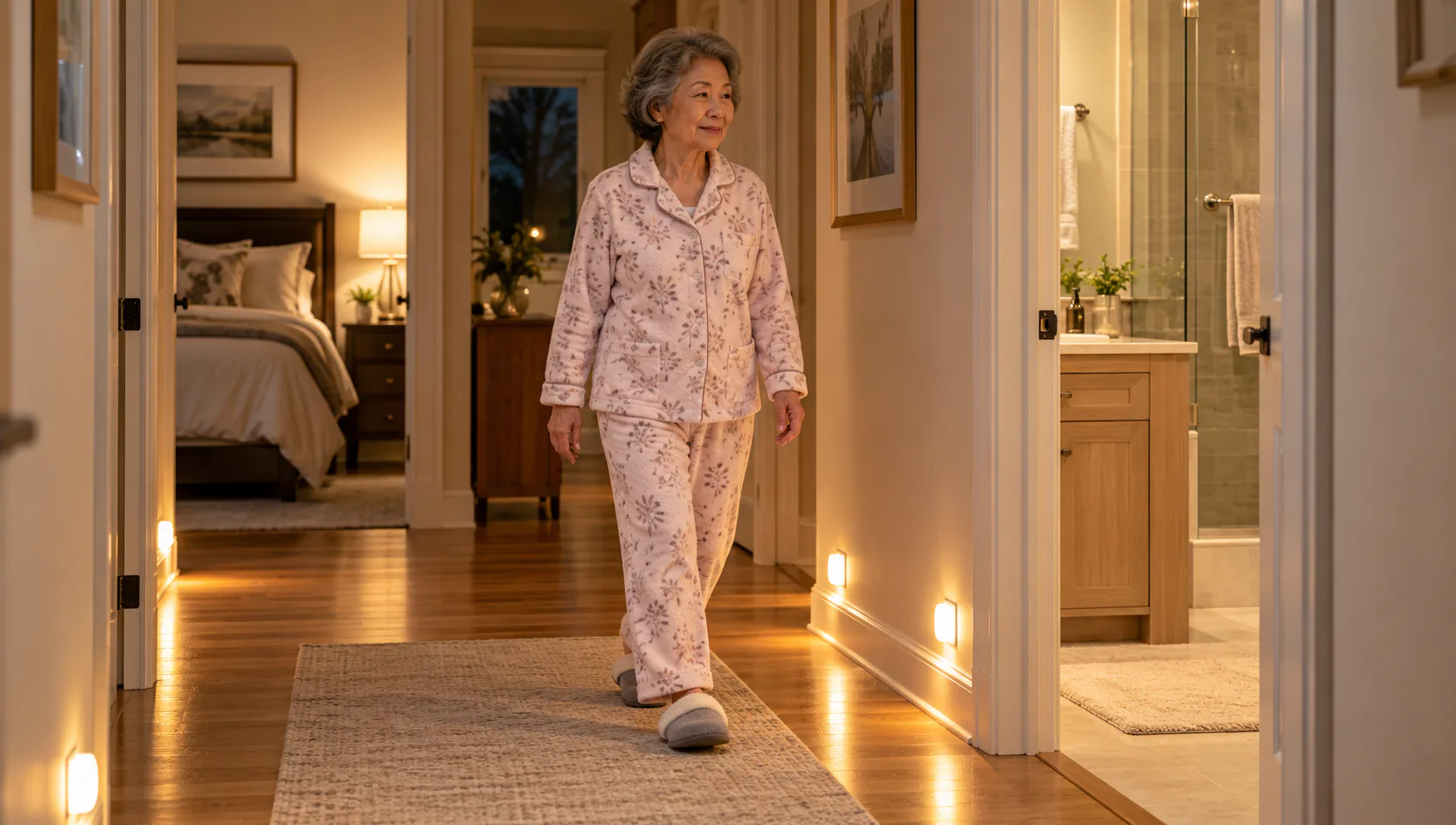
Keep a phone or emergency help device where it is easy to use. If an older adult frequently gets up to use the bathroom, provide enough light along the route from the bedroom so they can get up and walk slowly.
Sudden chest discomfort, difficulty breathing or other unusual symptoms should not simply be attributed to cold weather. Call 911 if symptoms are severe or the situation is an emergency. For someone living alone, plan ahead for another practical question: how can they let someone know they need help if their mobile phone is not nearby?
3 Check for fall hazards inside and outside
The Public Health Agency of Canada identifies obstacles and slippery walking surfaces as factors that increase the risk of falls in older adults. In winter, snowmelt tracked indoors, ice at the entrance and inadequate lighting all deserve attention.
Entrance and driveway
Clear snow and ice promptly, have suitable ice-melting supplies ready, and make sure the entrance is well lit. If an older adult should not shovel snow, arrange help from family or someone else in advance.
Entryway
Snowmelt on shoes can make indoor floors slippery. Use a secure non-slip mat and wipe up water promptly. A loose mat can itself become a tripping hazard.
Bedroom to bathroom
Remove cords and clutter, and provide gentle but adequate night lighting. The Government of Canada's home fall prevention advice for seniors specifically recommends keeping the path between the bedroom and bathroom clear and improving lighting throughout the home.
Bathroom
Use suitable non-slip equipment in the tub or shower. Grab bars or a bath seat may help when needed. Wipe up water promptly, and ask a health care provider or other relevant professional about appropriate assistive equipment.
4 Check carbon monoxide alarms before using the heating
Carbon monoxide is colourless and odourless, so you cannot rely on your senses to detect it. Furnaces, fireplaces and other fuel-burning equipment need proper maintenance. Test smoke and carbon monoxide alarms according to the manufacturer's instructions, and check their batteries and replacement dates.
Ontario's carbon monoxide alarm installation requirements expanded on January 1, 2026. Homes that meet the applicable conditions must have CO alarms near sleeping areas and on every storey as required, including floors without sleeping areas. The exact requirements depend on the type of home, fuel-burning equipment and other circumstances. Residents of other provinces should check their local rules.
After snowfall, check that snow has not blocked outdoor exhaust vents. If a carbon monoxide alarm sounds, get everyone out of the home immediately, then call 911 or local emergency services from a safe place outdoors.
5 Prepare at least 72 hours of supplies before an outage
The Government of Canada recommends keeping at least 72 hours of emergency supplies in case electricity or tap water is temporarily unavailable. Store supplies together in an accessible place and make sure everyone knows where they are.
Include drinking water, non-perishable food that is easy to eat, regular medication, a flashlight and spare batteries, a power bank, warm clothing and blankets, and important phone numbers. Add supplies for any specific health or daily living needs an older adult may have.
The Canadian Red Cross's power outage safety guidance warns against using charcoal or gas barbecues, camping heaters or generators indoors because they produce carbon monoxide. Your winter emergency plan should also cover how to contact family during a power or communications outage, rather than relying on a single method.
How can a senior living alone call for help
Heating, lighting, slip prevention and alarms help make the home safer. But if a parent falls, becomes unwell at night or cannot reach the phone, how will family members know?
Review the arrangements together in everyday life: where the phone is kept, who the emergency contacts are, and what to do in an emergency. Familiarity with the process is more useful than looking for instructions when something happens.
iTalkBB Peace Tone: Another way to call for help at home
iTalkBB Peace Tone provides emergency help functions for seniors and others who need support at home. Users can send a help signal by using the voice command “救命”, pressing the help button or pulling the emergency cord.
The system can notify designated family members and assist with contacting 911 emergency services when needed. Adult children may not live with their parents, and winter weather can affect visits. Setting up a clear way to call for help can therefore be part of preparing the home for winter.
To learn about iTalkBB Peace Tone features, installation and conditions of use, visit an iTalkBB store. Details and current offers are subject to the service terms in effect at the time.

A five minute home safety check before winter
Use the first five minutes to identify what needs attention. Allow additional time for repairs and gathering supplies as needed.
- Test the heating: Confirm normal operation and arrange professional maintenance if needed.
- Test the alarms: Check smoke and carbon monoxide alarms.
- Clear walking routes: Pay particular attention to the bedroom-to-bathroom path, entryway and entrance.
- Prepare outage supplies: Gather at least 72 hours of basics and personal essentials for older adults.
- Confirm how to get help: Make sure the older adult knows how to notify family or seek emergency assistance.
Winter home safety includes warmth, fall prevention, emergency supplies and a familiar way to call for help. Before cold weather arrives, check the home with your parents and follow up on each item that needs attention.
Frequently asked questions
When should families with older adults start preparing for winter
Start before cold weather or the first major snowfall. Test the heating and alarms, check fall prevention measures, and gather emergency supplies.
What winter home safety risks should seniors consider in Canada
Risks to consider include falls caused by slippery surfaces and obstacles, cold weather, power outages, and carbon monoxide associated with fuel-burning equipment.
How many days of emergency supplies should a household prepare
The Government of Canada recommends at least 72 hours of basic emergency supplies. Adjust the kit for an older adult's medication and personal needs.
Why does the bedroom-to-bathroom route need extra attention
Light levels are lower at night, and cords, clutter or loose mats can increase the risk of a fall. Keep the route clear and provide adequate lighting.
What should you do if a carbon monoxide alarm sounds
Get everyone out of the home immediately. Once you are safely outdoors, call 911 or local emergency services.
What else should seniors living alone prepare for winter
Family members should confirm everyday contact and emergency help arrangements, so the older adult knows how to notify someone after a fall or sudden illness. Keep phones and help devices easy to use.
When can iTalkBB Peace Tone be used
Peace Tone provides a way to call for help at home, including when a senior living alone falls, suddenly feels unwell or otherwise needs assistance. Contact iTalkBB for features and conditions of use.
Information disclaimer
This article is for general reference only and is based on official and credible sources available when it was written or updated. We make reasonable efforts to verify information, but cannot guarantee that third-party information remains complete, accurate or current. Policies, rates, product features and service terms may change. Please refer to the latest information from the relevant government, organization or service provider. Health-related content is not medical advice. For severe or sudden symptoms, seek professional medical help or contact emergency services.