
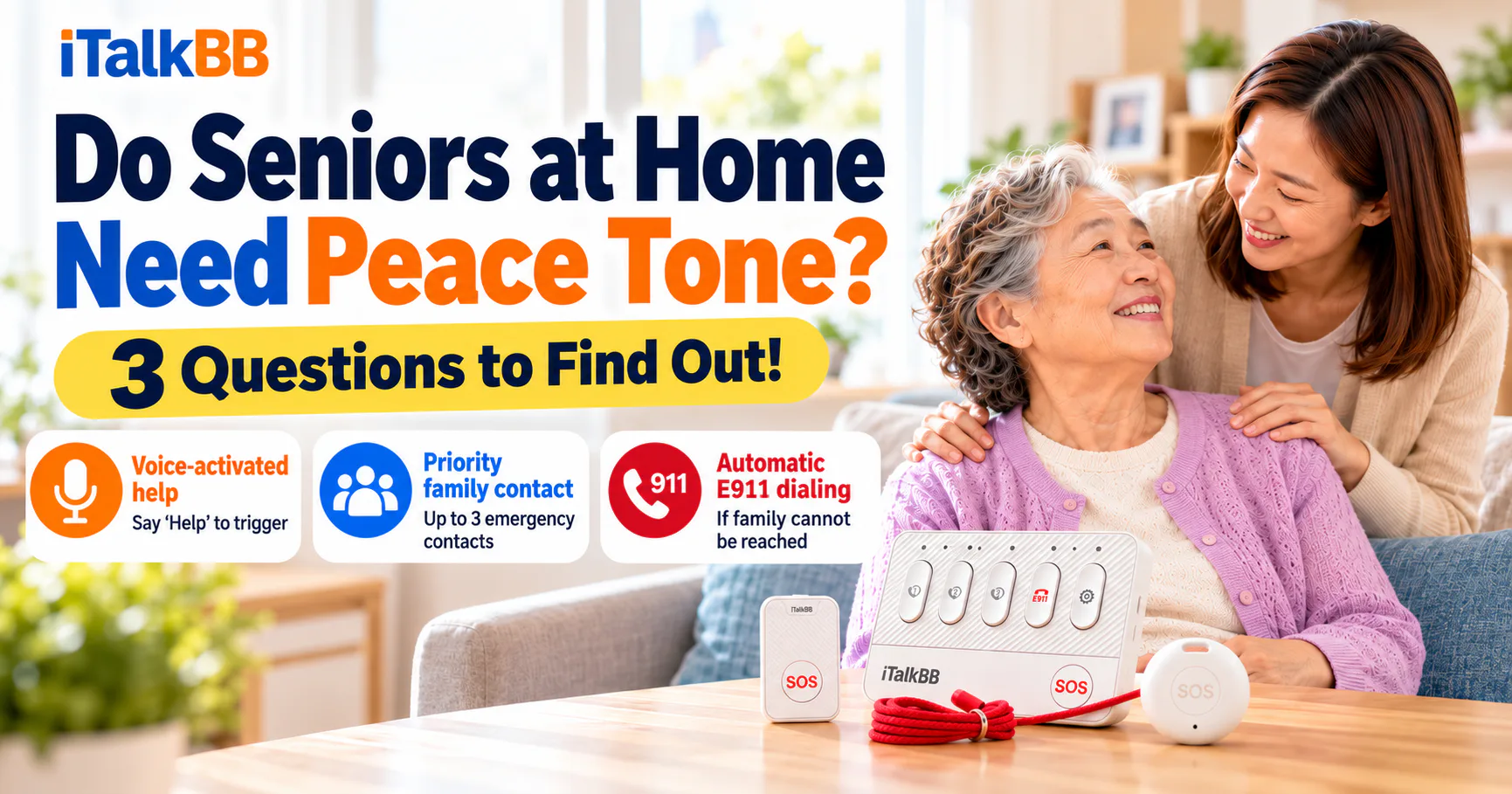
Does an older family member need iTalkBB Peace Tone, a personal emergency response system? Living alone is not the only consideration. Even if your parents live with family, it is worth reviewing their home safety and emergency plan if they spend much of the day alone, have fallen before, have mobility challenges, or might be unable to reach their phone when they feel unwell. These three questions offer a quick way to start that conversation.
Why does home safety matter for older adults?
Home is where many older adults feel most comfortable and independent. But slippery bathrooms, getting up at night, turning on stairs, and standing from a sofa can all present fall hazards. Alongside prevention, families need to ask another question: if something unexpected happens, can the person ask for help immediately?
According to fall-related information updated by the Public Health Agency of Canada in 2025, falls are a major cause of injury-related hospitalization among people aged 65 and older. In 2022, Canada excluding Quebec recorded 78,076 fall-related hospitalizations in this age group. That is a reminder to review both the home environment and how to get help before an emergency occurs.
Source: Public Health Agency of Canada — Falls among older adults in Canada
Three questions to review an older adult’s safety needs
Choose the answer that best reflects the person’s everyday circumstances. Then add up the points from all three questions.
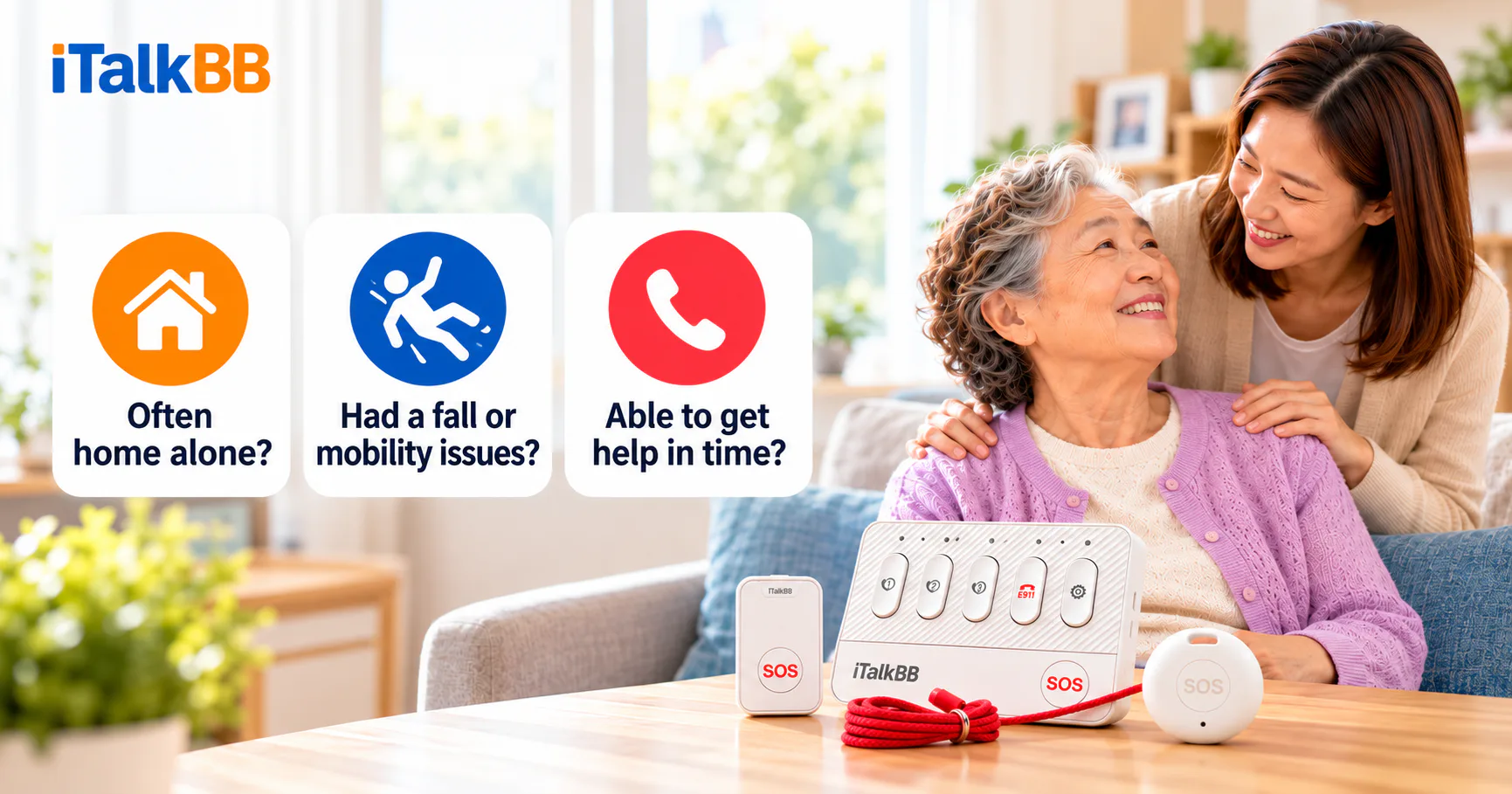
Question 1: Is the older adult often home alone?
Often: 3 points | Sometimes: 2 points | Rarely: 1 point
Living with family does not necessarily mean someone is always present. While adult children are at work, shopping, or picking up children, an older person may spend several hours on their own. Consider whether anyone would notice an urgent situation promptly.
Question 2: Have they fallen before, do they have a chronic condition or memory difficulties, or is it hard for them to move around?
Yes: 3 points | No: 1 point
A previous fall, reduced mobility, or changes in memory may indicate a need for more day-to-day support. The impact of a medical condition varies from person to person. Families can consider the need for handrails, mobility aids, or a health assessment rather than relying on age alone.
Question 3: If they suddenly feel unwell, can they get help promptly?
Yes: 1 point | Unsure: 2 points | Difficult: 3 points
Imagine feeling dizzy in the bathroom or being unable to get up from the living-room sofa. Is a phone within reach? Would the person know whom to call? What happens if their family contact cannot answer immediately?
Add up your score: 5 points or more deserves attention
3–4 points: Keep basic home safety measures in place and regularly review health, mobility, and ways to request help.
5–9 points: Take a closer look at household hazards, agree on an emergency contact plan, and consider an easy-to-use emergency alert device.
Important: This is a simple conversation starter developed by iTalkBB for families. It is not a medical diagnosis or a clinically validated risk scale. Five points is not a medical cutoff, and a lower score does not mean there is no risk. Seek advice from a healthcare professional if there has been a recent fall, fainting episode, or significant health change.
Learn more about iTalkBB Peace Tone
If the score is 5 or higher, start with these four steps
1 | Check bathrooms and stairs first
Use slip-resistant surfaces in showers or bathtubs and install secure grab bars where appropriate. Keep stairs free of clutter and make sure handrails are stable.
2 | Improve lighting and clear everyday pathways
Consider night lights between the bedroom and bathroom. Secure loose cables and rugs and remove tripping hazards. Place frequently used items within easy reach to avoid climbing or sudden bending.
3 | Agree on a family emergency contact plan
Make sure everyone knows whom to contact first, whom to call next, and what to do during a genuine emergency. Keep the contact list and home address in an easy-to-find place.
4 | Prepare a straightforward way to ask for help
A mobile phone is useful, but it may not always be close at hand. Depending on the person’s preferences, consider an alert device with a physical button, voice activation, or emergency contact features. Check it regularly and practise using it together.
Canadian government reference: The Safe Living Guide — A Guide to Home Safety for Seniors
Falls prevention checklist: You CAN Prevent Falls!
What is the difference between a mobile phone and an emergency alert device?
Phones are excellent for everyday calls, texts, and information, but someone in distress may not be able to reach, unlock, or navigate a phone. A home emergency response device can add a more direct way to request assistance and a prearranged contact sequence. Features, connectivity requirements, and call procedures differ by product, so review the service details before choosing one.
iTalkBB Peace Tone: another way to ask for help
To support Chinese Canadian families caring for older relatives, iTalkBB Peace Tone provides three core emergency response features designed to offer an additional way to seek help at home:
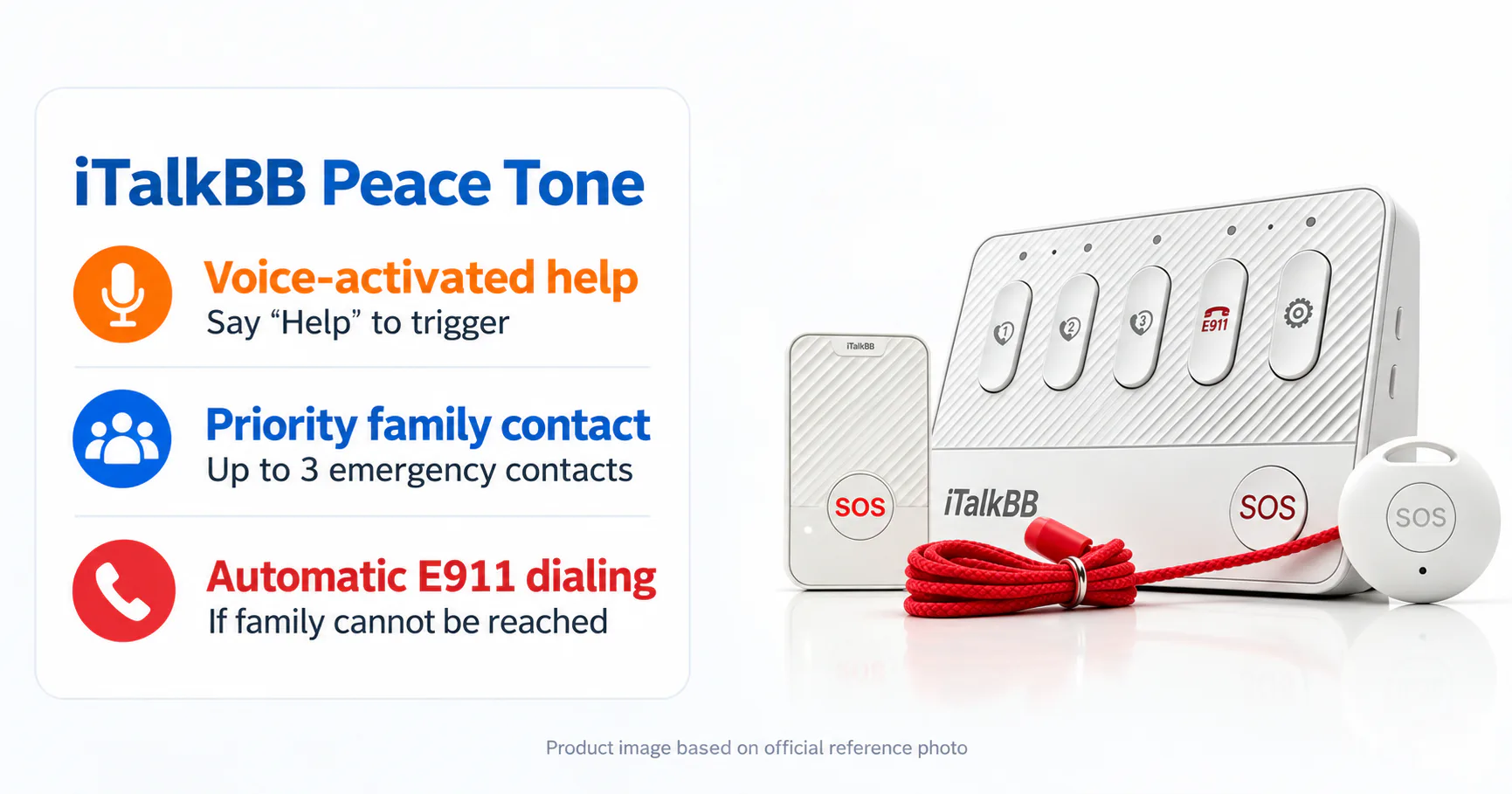
- Voice-activated help: Say the designated distress phrase “救命” (“help me”) to trigger an alert.
- Family contacts first: The system can prioritize up to three designated emergency contacts.
- E911 assistance: If family contacts cannot be reached, the system can automatically call E911 according to the service settings.
For example, if someone feels unwell in the bathroom, bedroom, or living room, having another way to request assistance without first locating a phone may help them notify family more easily. Peace Tone is a supplementary emergency response tool. It does not prevent falls or guarantee that every voice alert or contact attempt will succeed. Actual operation depends on device, network, and service conditions.
Service note: Peace Tone requires an eligible iTalkBB Home Phone service. Equipment setup, E911 address registration, and service terms are subject to the applicable enrollment process and official information.
Learn more about iTalkBB Peace Tone
Frequently asked questions
Do older adults need an emergency alert device if they live with family?
Possibly. The important factors are whether they are often alone, whether they can ask for assistance independently, and whether family can respond in time.
If someone has never fallen, is there still a need to plan ahead?
Yes. A fall history is only one consideration. Mobility, home conditions, changes in health, and access to help should all be reviewed regularly.
If a smartphone already has emergency calling, is another device needed?
It depends on how comfortable the person is with the phone and whether they can reach and use it in an emergency. A separate device may complement, rather than replace, a mobile phone.
Does Peace Tone contact family members directly?
Under the current product design, it first calls up to three configured emergency contacts. If nobody answers, it can proceed to E911 according to the service setup.
What service is required for iTalkBB Peace Tone?
An eligible iTalkBB Home Phone service is required. Eligibility, device configuration, and service details are governed by current official terms.
A final thought: caring can start with three questions
Feeling secure and maintaining independence matter to older adults. Going through these three questions together will not eliminate every risk, but it can open a practical conversation about home safety, family contacts, and everyday care. Thinking through “What would we do if help were needed?” is one useful way to turn concern into preparation.